
Home / Whole-Home Generators
Automatic standby power that keeps your heat, well pump, sump pump, and fridge running when the grid goes down. Professionally installed and serviced across Ada, Forest Hills, and West Michigan.
A clear, no-surprises process from your first call to the final inspection.
In short: a whole-home standby generator sits permanently outside your home and switches on automatically within seconds of an outage, powering your essential circuits or your entire house from natural gas or propane. Most installs take a day or two, and we provide a flat quote after a free in-home assessment.
In West Michigan, storms, ice, and grid strain make outages a question of when, not if. A standby generator protects what matters most when the power is out: your furnace, sump pump, well pump, refrigerator, medical equipment, and internet, without hauling out a noisy portable or running cords in the rain.
Unlike a portable unit, a whole-home generator is permanently installed, runs on your natural gas or propane, and starts on its own whether you are home or away. You get seamless, automatic backup power and real peace of mind.
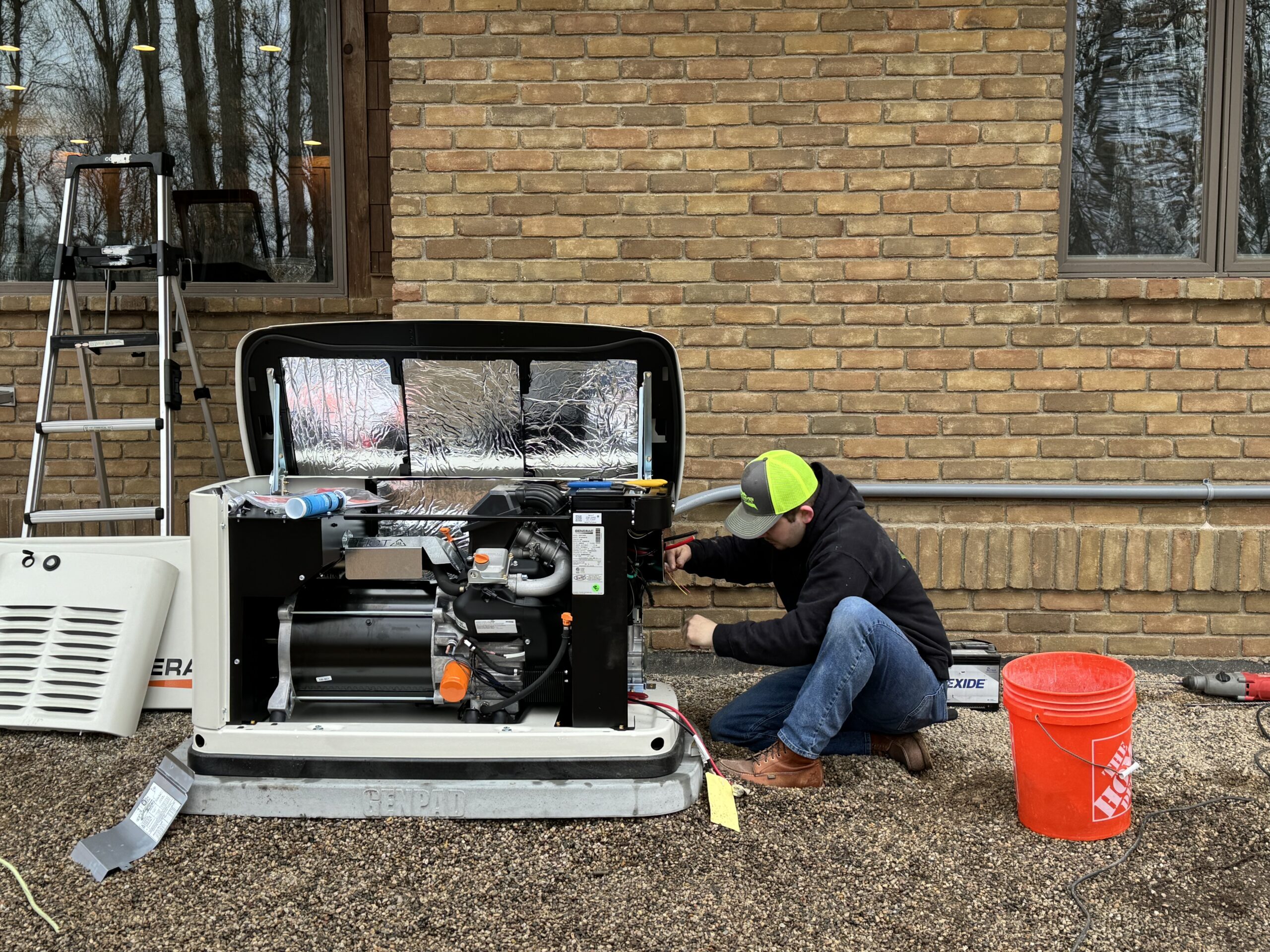
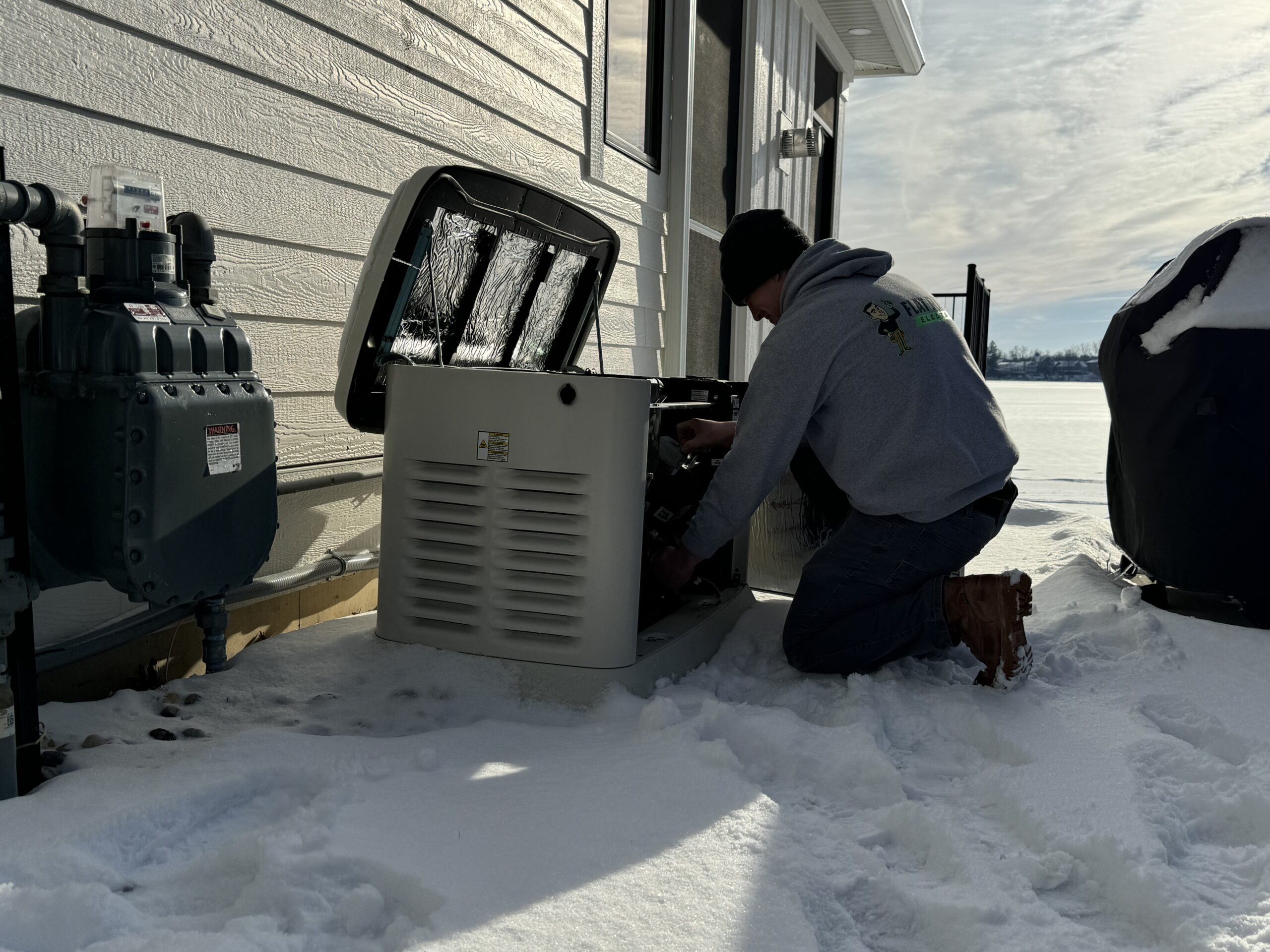
From sizing your system to keeping it serviced, we handle every part of your backup power.
Permanent, automatic backup power for your essentials or your entire home.
We measure your real loads and size the unit so it runs what you need, no more, no less.
Seamless switchover the moment the grid drops, and back again when it returns.
Natural gas or propane connections coordinated and installed to code.
Keep your generator ready with routine service, testing, and repairs.
We pull the permit, coordinate with your utility, and handle the final inspection.
We install and service Generac and other quality standby generators, sized and installed to keep your home powered for years.
We size every install to your home and budget. Here are the three common approaches.
Backs up the must-haves: furnace, sump pump, well pump, fridge, and key outlets.
Powers most of your home using smart load management, so a right-sized unit runs more for less.
Runs everything at once, including central air and electric appliances, with no compromises.
Not sure which fits? We’ll size it exactly during your free in-home assessment.
No obligation, we usually reply the same day.
On install day: we set the pad and generator, connect the fuel and transfer switch, start it up, test the automatic switchover, and walk you through everything before we clean up. Then it quietly stands guard, ready the next time the power goes out.
Your standby generator runs on an engine with oil, filters, a battery, and spark plugs, just like your car. For it to start the instant the power goes out, it has to be maintained. Skip it, and the one time you need backup power most could be the time it won’t run.
We offer generator maintenance and service plans that keep yours tested, tuned, and ready all year, so you never have to wonder whether it will work when you need it.
Rated 4.9 out of 5 from 396 Google reviews ★★★★★
“Highly recommend. The team was on time, courteous, and answered all my questions before starting on our outdoor lights. They worked half the day in the rain to make sure the job was done on time.”
“Mike came out the next day to verify the location on a panel conduit leak. Very professional and explained in detail what needs to be done.”
“Mike and Grant were professional, communicated well, and got our service scheduled quickly. They fixed the wiring providing electricity to our garage.”
Generally yes, and most Ada homes are on a gas main. Natural gas means the fuel supply is already at the property, there is no tank to site, nothing to refill, and no runtime limit to plan around: the generator can run as long as the outage lasts. That removes the biggest planning question that propane properties have to work through. What still needs checking is whether the existing gas supply can feed the generator alongside everything else in the house, since a standby unit is a substantial appliance. We confirm that during the site visit before recommending a specific model.
Manufacturers specify minimum clearances from the building, from windows and doors, and from anything combustible, and local placement rules add their own requirements about distance from property lines. Beyond the rules, placement is a practical decision: close enough to the panel and the gas supply to keep the runs sensible, far enough from bedroom windows that the weekly self-test is not intrusive, and somewhere we can actually reach it in February to service it. We walk the property with you before quoting and settle on a spot that satisfies all of that rather than picking the first flat surface.
Almost certainly. A whole-home air-cooled standby unit is smaller than most people picture: think along the lines of a central air condenser, sitting on a small pad. On the more compact Ada lots the constraint is usually not the footprint itself but the required clearances around it and the setback from the property line, which is what determines the workable positions. In practice we very rarely find an Ada property with nowhere to put one. If yours is genuinely tight, we will tell you at the site visit rather than after the unit has been ordered.
That is a fair question and worth answering honestly. If you are on municipal water, an outage does not cost you water the way it does for a home on a well, so one of the strongest arguments for a generator does not apply to you. What remains is everything else: heat in January, refrigeration and a freezer full of food, sump pumps if you have a basement worth protecting, medical equipment, internet and the ability to work from home, and simply not evacuating to a hotel during a multi-day outage. For plenty of Ada households that is more than enough. For some it is not, and we will say so.
Yes. It is wired in through an automatic transfer switch that monitors the utility supply constantly. When power drops, the switch starts the generator, waits for it to stabilize, and transfers the house across. When utility power returns and stays steady, it switches back and shuts the unit down. The whole sequence takes seconds and happens whether you are home, asleep, or away for the weekend, which is the real value, because outages rarely wait until it is convenient. Units also run a brief self-test on a schedule so a problem shows up on an ordinary Tuesday rather than during the storm.
We quote after a site visit rather than over the phone, because the number genuinely depends on the property. The main variables are the size of the unit your home needs, how far the generator will sit from both the electrical panel and the gas supply, whether the panel has room for a transfer switch or needs work first, and what the gas connection requires. Ada installs are often reasonably straightforward: gas is usually already there and the runs tend to be short, but we would rather look than guess. Mike prices every generator project personally and you get a firm written number.
Yes, and we take care of it. A standby generator installation involves both electrical and gas work, so it needs permits and inspection, and there are placement and setback requirements that govern where the unit is allowed to sit. We file the applications, schedule the inspections and meet the inspector on site. Beyond satisfying the rules, that inspection record is documentation that a permanently installed, gas-fed appliance was put in correctly, which is exactly the sort of thing that comes up later when the house is being sold and a buyer’s inspector starts asking questions.
Most installations are one to two days on site, though the overall timeline is longer because of permitting and scheduling the gas work. There is a short planned power interruption while the transfer switch is tied into your panel. Afterwards, a generator is an engine and needs periodic attention: oil and filters, spark plugs, battery, and a check of the fuel connections, generally annually or on a running-hours basis, and usually required to keep the warranty valid. The battery is the part that catches people out; it is the most common reason a generator fails to start when it is finally needed.
Book a free in-home assessment and we’ll size the right generator and give you a clear, flat quote.