
How to Read a Carbon Monoxide Detector
Carbon monoxide poisoning brings more than 20,000 Americans to the ER each year, according to the Centers for Disease Control and Prevention. Fortunately, our electrical contractors can install carbon monoxide detectors throughout your home so you’re protected against this silent killer.
Carbon monoxide is odorless, colorless, and tasteless. Continue reading to learn how to understand what your carbon monoxide detector is telling you.
When a Carbon Monoxide Alarm Should Be Taken Seriously
If your carbon monoxide detector is alerting repeatedly, displaying abnormal readings, or behaving inconsistently, it may indicate more than just a low battery or temporary issue. In many West Michigan homes, especially older properties, we often find that improper electrical power, aging wiring, outdated panels, or appliance-related issues can contribute to unsafe conditions or false alerts.
A properly functioning carbon monoxide detector relies on a stable electrical system and correct installation. When there’s uncertainty about what your detector is telling you, having a licensed residential electrician evaluate the system can help confirm whether the alert is legitimate and whether your home’s electrical infrastructure is safely supporting the device.
What to Do If Your Carbon Monoxide Detector Keeps Alerting
If your carbon monoxide detector continues to alarm or shows elevated readings, take the situation seriously and follow these steps:
Open windows and doors immediately to ventilate the home
Leave the house if anyone experiences dizziness, headaches, or nausea
Check whether the detector is hardwired, battery-powered, or connected to your electrical system
Verify the age and placement of the detector
Schedule a professional inspection if alerts continue or seem abnormal
If you’re unsure whether your detector is functioning correctly or whether your home’s electrical system is contributing to the issue, a professional electrical inspection can help ensure everything is operating safely.
Need Help Verifying Your Home’s Electrical Safety?
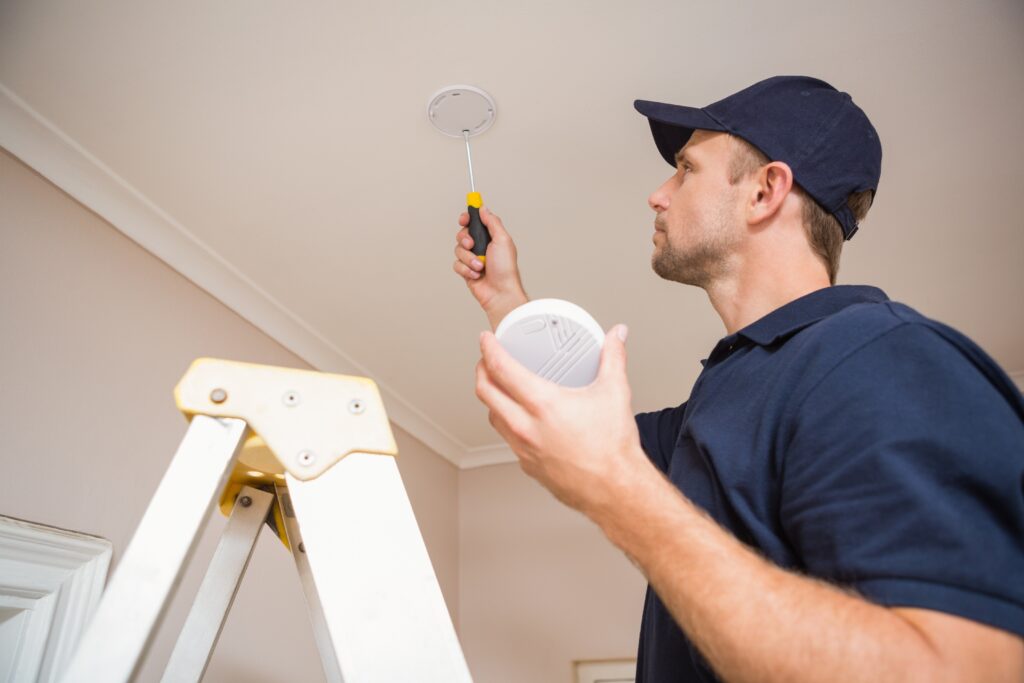
1. Hire an Electrician to Install CO Detectors
Just like smoke detectors, you’ll need carbon monoxide detectors on every level of your home and outside sleeping areas. Typically, the manufacturer will recommend you install the CO detectors near the ceiling. If you don’t feel comfortable installing CO detectors, call our electricians. We’re always more than happy to help customers make their homes safer.
Carbon monoxide weighs the same as air. However, carbon monoxide is warmer than air when it leaks from fuel-burning appliances. Since heat rises, the carbon monoxide floats to the ceiling where it will be detected by your carbon monoxide alarms.
While most carbon monoxide leaks come from fuel-burning appliances, you shouldn’t install your CO detectors too close. It’s not uncommon for fuel-burning appliances to release a puff of concentrated carbon monoxide when they first switch on, which could give your CO alarm an inaccurately high reading.
2. Understand How CO is Measured
Carbon monoxide is measured in parts per million (PPM). This simply means that for every million parts of air, one of those parts is carbon monoxide. PPM is often used to quantify how much liquid or gas contaminant is present.
3. Recognize When CO Levels are Dangerous
If your CO levels creep above 35 PPM, evacuate your home and call 911. While this shouldn’t be taken as a strict guideline, it helps you understand when carbon dioxide becomes dangerous.
35 PPM Maximum concentration allowed by federal law
200 PPM Headaches, dizziness, or nausea after 2 -3 hours
400 PPM Severe headaches after 1-2 hours, death after 3 hours
1,600 PPM Death in 1 hour
10,000 PPM Death in less than 10 minutes
Signs of carbon monoxide poisoning:
- Dull headache
- Dizziness or weakness
- Flu-like symptoms
- Nausea
- Vomiting
- Confusion
- Blurry vision
If you recognize any of the above symptoms, visit your local ER as soon as possible. Signs of carbon monoxide poisoning are likely to show up first in children, the elderly, and pets.
We highly encourage homeowners install carbon monoxide detectors so they can prevent illness or even death. The less carbon monoxide you breathe the better chance you’ll have of making a full recovery.
4. Remain Calm
Just because there’s a reading above 0 PPM, doesn’t mean you need to evacuate your home and call 911. In general, federal law considers any reading under 35 PPM to be safe for people exposed more than 8 hours. However, this is only a guideline and not an absolute rule.
5. Call for Help
Elevated carbon monoxide levels are an emergency. If you’re getting a reading of over 35 PPM, you need to evacuate your house and call either 911 or the non-emergency police number for your area.
Emergency personnel can identify the source of the carbon monoxide leak, repair it, and remove the CO from your home. Until then, it won’t be safe for you or your family to be inside.
If you live in East Grand Rapids, Ada, or the surrounding West Michigan area, our licensed residential electricians can help confirm that your carbon monoxide detectors are properly installed, correctly powered, and functioning as intended.
Many homeowners reach out simply to gain peace of mind—especially in older homes or after repeated alarms.
👉 Learn more about our residential electrical safety and troubleshooting services
Older homes often require electrical updates to properly support modern safety devices like carbon monoxide detectors. Outdated panels, aging wiring, or improperly powered circuits can affect how detectors operate and how alerts are triggered. Ensuring your home’s electrical system is up to date plays a key role in long-term safety and reliability.
Carbon Monoxide Detector Safety FAQs
Yes. Issues such as unstable power, faulty wiring, or improper installation can cause some detectors to behave erratically or display false alerts.
A licensed electrician can verify that the detector is properly powered, installed correctly, and supported by a safe electrical system—especially in hardwired units.
Most carbon monoxide detectors should be replaced every 10 years, depending on the manufacturer and model.
No. Even if the alarm stops, it’s important to determine why it activated and confirm that your home is safe before dismissing the alert.
Add Your Heading Text Here
You can trust our Lowell electricians to install the best carbon monoxide detectors for your home. To learn how we can install carbon monoxide detectors in your home, call us today at (616) 987-0978.